Quiet and Loud
“Since 1982, libraries across the United States have observed Banned Books Week—a time to shine a light on titles that have been targeted for removal from schools and libraries. Recent years have seen an alarming rise in the rate of bans and challenges. The American Library Association (ALA) tracked 4,235 unique titles challenged in 2025, a figure previously exceeded only in 2023. In addition, 92% of all book challenges were initiated by pressure groups, government officials, and decision-makers—not individuals.” — The New York Public Library (NYPL)
The brilliance of this campaign lies in its friction with the library’s traditional archetype. While libraries are culturally coded as passive, silent sanctuaries of history, the NYPL boldly stepped into the boxing ring of free expression, successfully subverting public expectations. Through its “Instant Access to Frequently Banned Books” initiative, the library gave cardholders the power to instantly borrow a digital selection of 33 heavily contested titles. For several weeks, this program completely bypassed the standard waitlist system, providing frictionless access to landmark books like George Orwell’s 1984, Toni Morrison’s The Bluest Eye, and Sarah J. Maas’s A Court of Thorns and Roses.
Recognizing that censorship directly impacts the next generation, the NYPL also launched the Teen Banned Book Club to hand young readers a megaphone. Shifting the spotlight away from adult bureaucratic debates, this initiative invited teens to actively shape the conversation. The library’s dedicated portal provided DIY starter guides and thought-provoking discussion prompts to help youth launch their own local chapters, bridging the digital initiative with live community events and virtual panels across the five boroughs.
This youth-led perspective was beautifully captured in the library’s Teen Voices magazine, which featured a striking gallery of personal essays and original artwork. Each teenager’s creation offered a poignant, raw look at how the battle over literature affects their personal world—leaving us genuinely inspired by the creative depth behind their art.
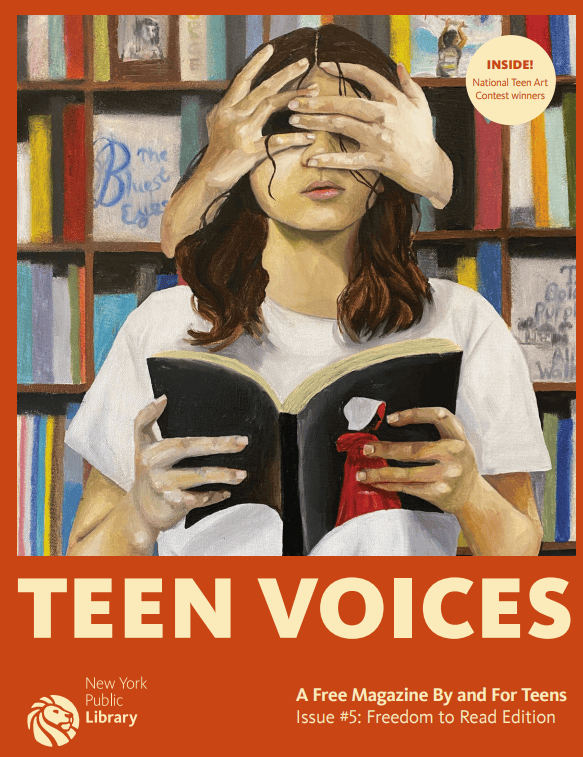
Image above via nypl.org
To scale the movement beyond its physical walls, the NYPL integrated open-source activism into the campaign, offering downloadable toolkits complete with activist flyer designs and printable button graphics. The library also brought its digital campaign directly to the asphalt by hosting Penguin Random House’s “Banned Wagon.” The mobile truck visited two NYC locations to give away free banned books, anchoring the campaign with a tangible physical presence on the city streets.
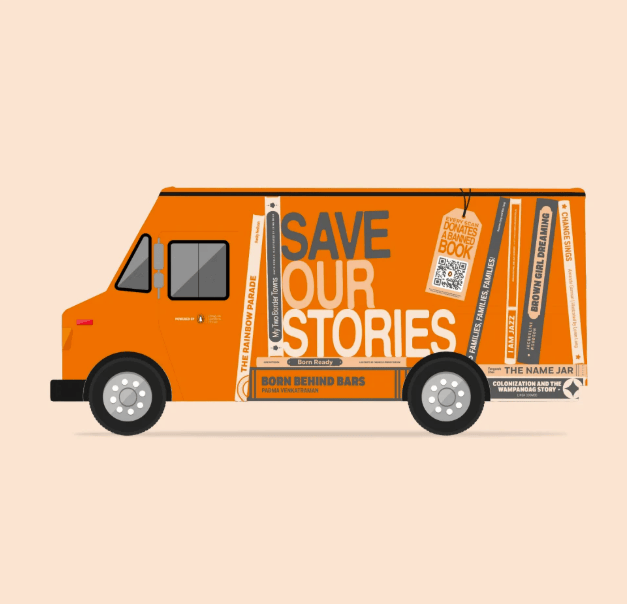
Image above via penguinrandomhouse.com
Across the library’s website and promotional banners, the campaign’s visual assets mirrored its message: words stood stark, capitalized, bold, and entirely unobstructed. The NYPL’s mission has been unmistakable from day one. Rather than treating Banned Books Week as a passive calendar checklist, they continue to expand their footprint year after year through interactive programming, public dialogue, and by keeping the conversation around censorship alive throughout the entire year.
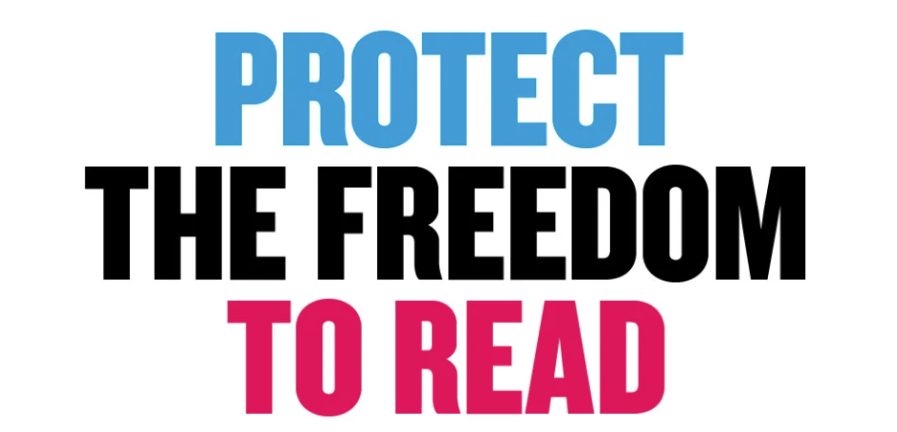
Image above via nypl.org
Here at WetPaintNY, we commend the NYPL for refusing to be silenced, investing real institutional power into this fight, and proving that defending the right to read demands a loud, unapologetic system.
