More Than Hair
Belcalis Almánzar, universally known as Cardi B, should be recognized as much for her brilliant marketing genius as she is for her rap career.
Back in 2025, ahead of the release of her album Am I the Drama?, the Bronx native executed a masterclass in grassroots promotion. Dressed down in a hoodie, sweatpants, and slides; she recorded a video of herself selling CDs inside a New York City 2 train subway car. It is a scene every New Yorker recognizes instantly—not because of the celebrity presence, but because it perfectly mirrors the countless local entrepreneurs who walk through train cars daily selling snacks or promoting their own music. Holding her CDs in a cardboard Welch’s Fruit Snacks box was no accident. The casual wardrobe, the “hustler’s speech” , and the subterranean setting paid brilliant homage to her Bronx upbringing. To double down on this theme, she also laid her CDs out on a blanket on the sidewalk, casually asking passersby to buy a copy. These promotional stunts—clever nods to the street and subway entrepreneurs who define NYC culture—went viral across social media precisely because they felt entirely authentic to her roots.

Image above via Instagram @iamcardib
This deep connection to her upbringing sets the stage for her next major venture in 2026. In April, Cardi officially launched Grow-Good Beauty, a hair care line that completely sold out in less than an hour. The immediate success made perfect sense; Cardi had been openly documenting her natural hair journey with fans via live videos for years. By blending her personal experiences with Afro-Latina family traditions, she established herself as an incredibly credible authority. The business didn’t come out of left field; it felt like a natural, earned transition.
Value and accessibility are central to the brand, with every item in the line priced under $20 to make it attainable. Just like the Welch’s fruit snack box, this price point was an intentional, calculated choice. While her massive celebrity status could have justified a luxury price tag, keeping the products affordable ensured they remained accessible to her core audience. The pricing spoke for itself, and the market responded in kind, completely wiping out the website’s inventory in under an hour.
While image is everything for celebrities, the brilliance of this campaign lies in the small, hyper-specific details that speak volumes. Take the packaging, for example: a minimalist bright green container with bold black lettering. Green instantly evokes plants, nature, and growth. The design shuns fancy imagery and convoluted buzzwords, keeping the message straightforward and to the point.
The promotional imagery leans heavily into this unfiltered realism. A standout photo from the campaign features Cardi’s hair wrapped in a standard plastic “Thank You” grocery bag. It captures a universally relatable moment for her audience. Countless people have whipped up a DIY hair mask and reached for a grocery bag to repurpose as a wrap. Instead of manufacturing a branded shower cap to upsell on her website, Cardi leaned into everyday reality. The internet noticed; the image sparked widespread conversations online, with fans sharing their own nostalgic stories about homemade hair care.
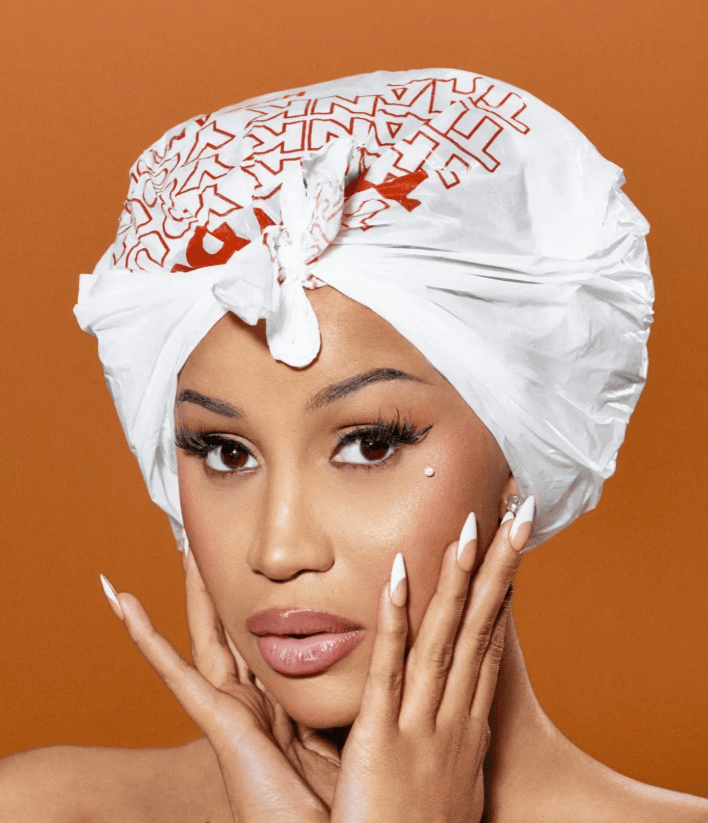
Image above via Facebook Cardi B
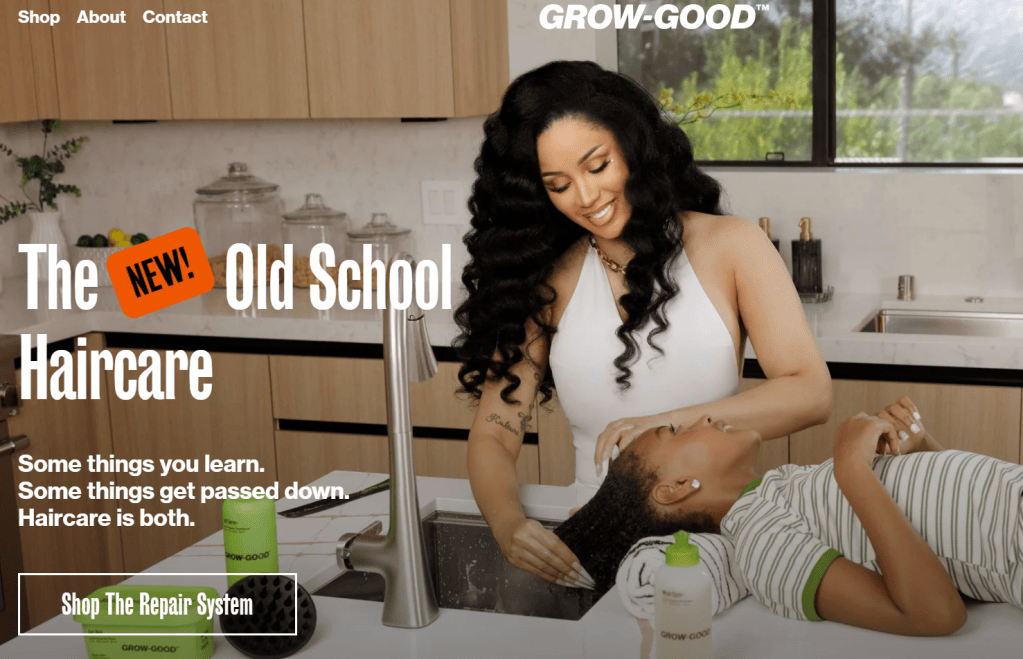
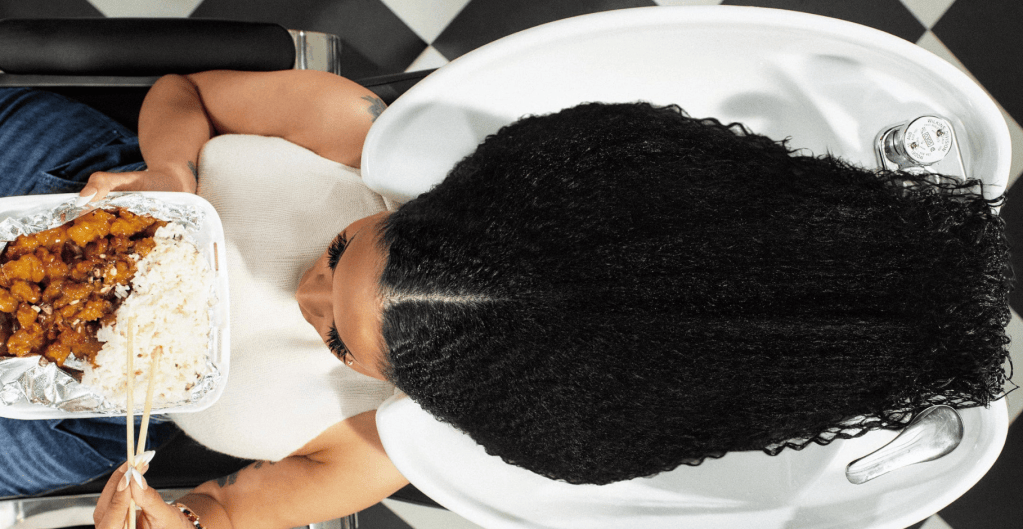
The Grow-Good Beauty website furthers this theme of intimacy and trust. One featured image shows Cardi washing her daughter’s hair over a kitchen sink. This raw, tender moment between parent and child subtly signals that the formulation is gentle and kid-friendly. By using the product on her own child, Cardi builds immediate consumer trust—she wouldn’t compromise her daughter’s hair health for a gimmick. On the site’s “About” page, she is shown leaning back in a salon-style chair, casually holding a container of takeout food. This image perfectly evokes the unique cultural experience of getting one’s hair done in a Dominican salon, where locals frequently pop in to sell food and chat. While an outsider might just see a busy celebrity multitasking on a break, anyone familiar with NYC salon culture recognizes it as a respectful nod to community spaces. To subtly anchor this, her wrist features a blue, white, and red bracelet representing her Dominican heritage.
Images above via growgood.beauty/
Another striking image on the website features Cardi’s hand smoothing down her hair, accompanied by the bold declaration: “Cardi wants you to know this image is not edited!” By highlighting these tangible, unaltered results rather than relying on typical industry airbrushing, the brand reinforces a foundational layer of transparency and consumer trust.
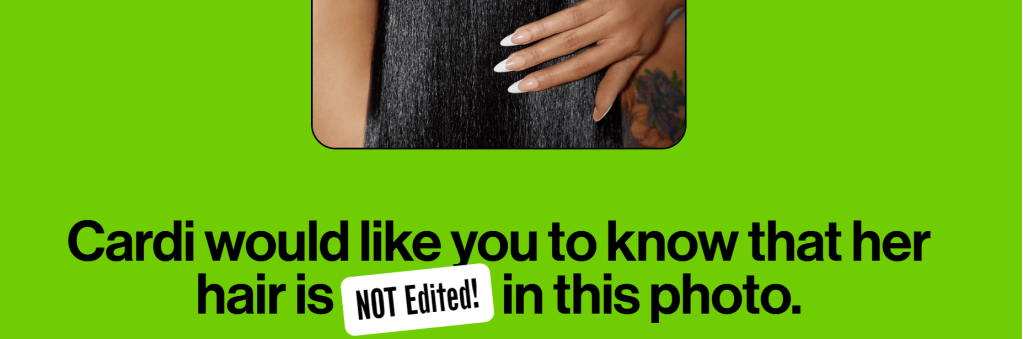
Image above via growgood.beauty/
Perhaps the most definitive marketing choice was Cardi’s distribution strategy. Instead of partnering with retail powerhouses like Sephora or Ulta, she chose to launch exclusively in local beauty supply stores. In an ESSENCE article covering her launch at the Black-owned Beautify Beauty Supply Store in Harlem, Cardi is quoted saying, “It was important for me to choose Black-owned beauty supply stores, because I learned how rare that was… It was also important for me to select shops that, some of whom, I had personal relationships with.” By stocking the shelves of the very neighborhood stores she grew up visiting, Cardi bypassed corporate gatekeepers to reinvest in local businesses. Ultimately, the campaign for Grow-Good Beauty succeeded because it was never just about hair care—it was a calculated, respectful homage to community, trust, and her own roots.
